


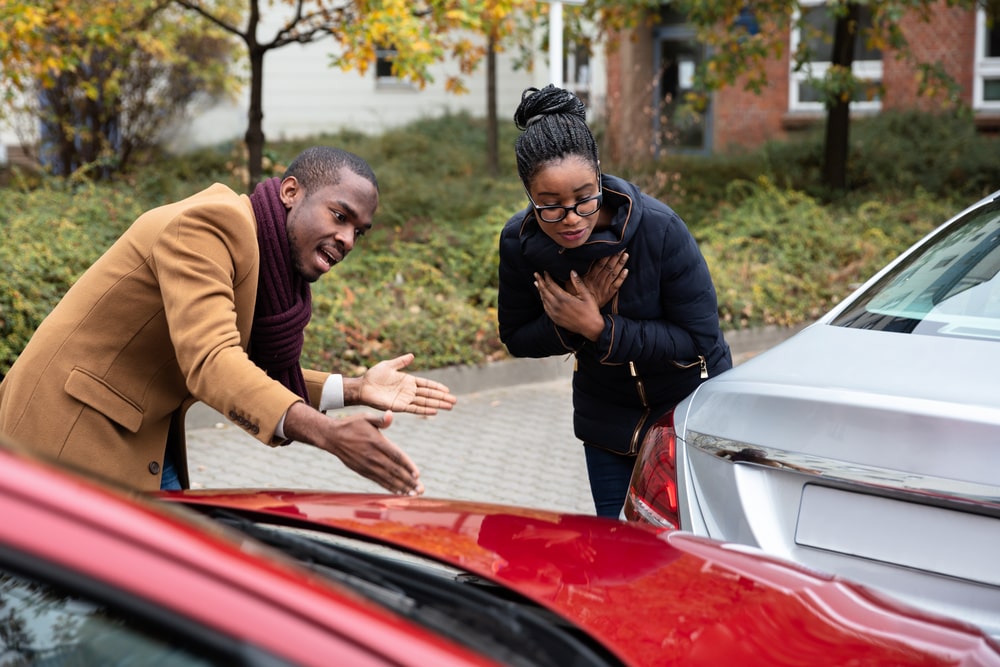
When several vehicles pile into one another, the first question is which driver left too little room. Nebraska sets a following-distance rule that applies to every driver. A crash on West Maple Road can turn on how that rule applies to each vehicle in the chain.
The general following-distance rule
Nebraska Revised Statute 60-6,140 bars a driver from following another vehicle more closely than is reasonable and prudent. The driver has to weigh the other vehicle’s speed, the traffic, and the condition of the roadway.
The standard has no fixed number of feet. A gap that works on dry pavement can be too small on a wet road.
When the 100-foot rules apply
The statute adds a 100-foot following distance for roads outside business or residential districts in three situations:
- A driver pulling a trailer or semitrailer can’t follow another towing vehicle closer than 100 feet.
- Any driver must stay 100 feet back from a highway maintenance vehicle that is working on or near the road with a flashing amber or white light.
- Any driver must stay 100 feet back from any other vehicle displaying flashing amber or white lights.
Inside a business or residential district, the general rule is the one at issue. The question becomes whether the following driver left a reasonable gap.
How a chain reaction is analyzed
A multivehicle crash can have more than one cause. A driver in the middle of the chain may have been struck from behind and pushed into the car ahead, which differs from a driver who braked late. Each driver’s gap, speed, and attention are examined separately.
Each vehicle’s part has to be separated before a claim is valued. A driver hurt in a chain crash can ask an Omaha multivehicle accident lawyer how the sequence of impacts was established.
Evidence that shows the order of impacts
Records that reconstruct a pileup include:
- Vehicle damage at the front and rear shows where each impact happened.
- Event data recorders store speed and braking information for each vehicle.
- Camera footage from businesses and traffic cameras can show the sequence.
- Witness statements describe what each driver did before the first impact.
Fault among several drivers
When more than one driver contributed, the claim can involve several insurers. Insurers can point at one another, and a claim against any one driver depends on proof about that driver’s gap.
Fault is divided among the drivers, and a driver’s share can reach fifty percent fault, which is one reason each share has to be argued with evidence. That makes the order of impacts central to every claim.
Higher speeds lengthen the chain
Speed shrinks reaction time. A tractor-trailer covers more ground before it stops than a car does, so a chain that includes one raises its own distance questions.
Highway speeds lengthen the chain of vehicles that can be involved in one crash. In highway accident cases, every driver’s gap comes under close scrutiny.
Trucks in the chain
A crash that includes a truck adds a carrier and its insurer to the claim, along with the truck’s own data recorder. Each can hold speed and braking evidence.
More parties are involved in Omaha truck accident claims, but the Nebraska statute still governs the gap that each driver left. Carrier records are weighed against driver accounts.
Whiplash symptoms in a pileup
Rear-end impacts inside a pileup can cause whiplash and other injuries that appear days later. Treatment records fix the timeline for the claim.
Delayed symptoms from rear-end accidents and whiplash are documented through the first medical visit and follow-up care. Those records tie later symptoms back to the crash.
The last driver in the chain
The driver at the back of a chain is not automatically the only one responsible. An impact from behind can push a car into the one ahead, which shifts how responsibility is split.
A claim against that driver is a rear-end collision claim built on the same gap-and-speed facts, adjusted for the pushes in the chain. Each impact’s evidence decides how all of the claims line up.
Jason Ausman serves as president of the Nebraska chapter of the American Board of Trial Attorneys and owns Ausman Law Firm P.C., L.L.O., our firm. He also holds a Fellowship in the American College of Trial Lawyers.
Records worth collecting from a pileup
Photos of every vehicle, the names of the other drivers, and each driver’s insurance details are worth collecting while the scene is fresh. Write names down before vehicles move.
A driver caught in a chain of collisions can schedule a conversation with an Omaha multivehicle accident lawyer about sorting out who owes what. A list of each driver and plate number is a useful start.


"I would highly recommend Jason Ausman and his team. Jason was extremely helpful during the settlement of my case and his support team also was great to work with."
"So much compassion and patience from everyone at this firm. I’m incredibly thankful for their dedication to my case and making sure I received the best outcome possible. Thank you!"
“Michelle Dreesen and her firm Ausman Law were very professional, caring and provided outstanding guidance with our case. Totally recommend her and her firm.”
“A professional, knowledgeable and dedicated team. Ausman Law managed my case and advocated for me exceeding my expectations! Thank you Ausman Law!”
“Jason and his team are very smart professional and personable.. easy to work with and make you feel comfortable working with them.. definitely the law firm you want in your corner!”
"Jason and his staff are the best! I was always made to feel like I was a priority when speaking with Jason or one of the wonderful ladies in his office. It was an awesome client experience and I will definitely call them again when I need a good attorney!"
"Matt and Ann took on a very difficult case. They care!! They definitely worked hard and never gave up!! Much appreciated."